
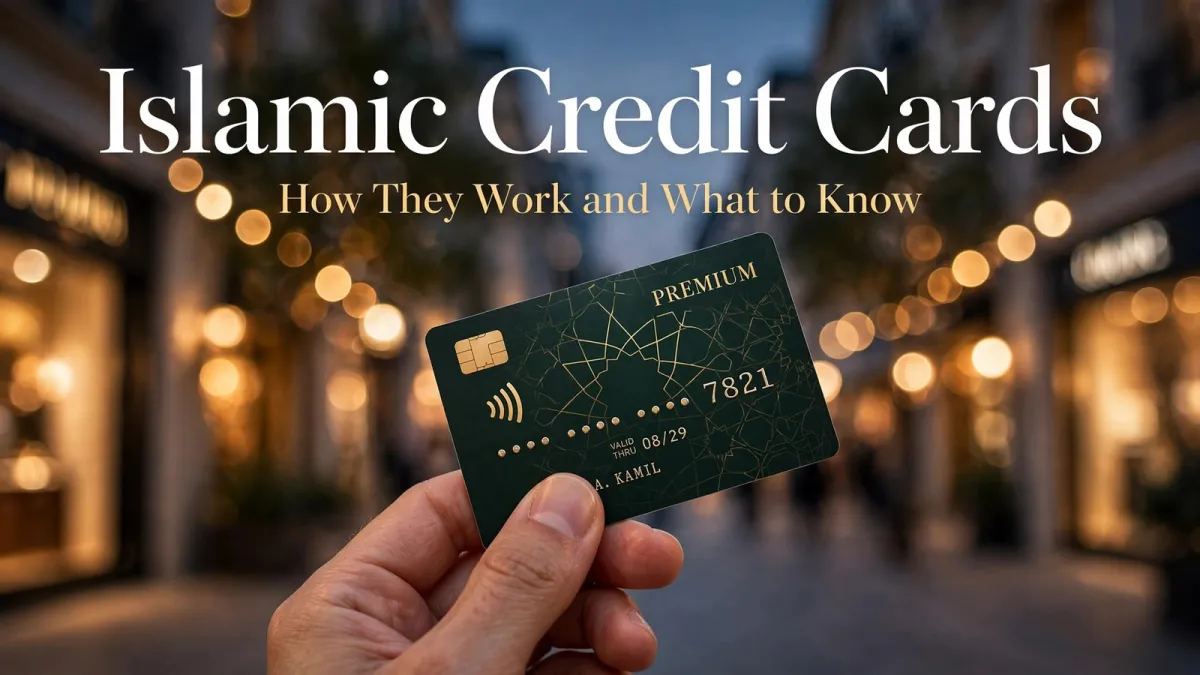
Credit cards are everywhere — and for Muslims, the conventional ones come with a built-in problem: interest. The good news: Islamic credit cards exist, built on Sharia-compliant structures that give you the convenience without the riba.
This guide explains how Islamic cards work, how they differ from conventional ones, and how to use any card wisely. Educational information — not financial advice.
Watch: Building Halal Wealth
Why Conventional Credit Cards Are a Problem
Conventional cards charge interest on unpaid balances — often 20%+ APR, compounding monthly. That is riba, plain and simple. Even if you "never pay interest," the contract itself is interest-based.
The Sharia Structures Behind Islamic Cards
- Ujrah (fee-based): you pay a fixed service fee; the bank earns from the fee, not from interest.
- Tawarruq: a commodity-based structure funding your credit line without riba.
- Qard-hasan based: benevolent-loan models with service charges only.
Always confirm the structure with the provider's Sharia board — names vary, substance matters.
How an Islamic Card Works Day to Day
You spend, you get a grace period, you repay. The difference: no interest ever accrues. Late-payment handling follows Sharia rules (no compounding penalties) — terms vary by provider.
Islamic vs Conventional Cards
- Unpaid balance: fixed fees, never compounding interest vs compounding interest.
- Contract: service-fee based vs interest-based.
- Sharia: permissible with proper oversight vs impermissible.
Choosing Wisely: A 6-Point Checklist
- Named Sharia board.
- Clear, fixed fee schedule.
- No interest or compounding penalties anywhere in the terms.
- Rewards that are halal (avoid gambling-like schemes).
- Reasonable limits for your income.
- Good customer service and dispute handling.
Using Any Card Responsibly: Universal Wisdom
Pay the full balance every month. Never spend what you don't have. Track every transaction. A card is a payment tool, not extra income.
If You Are Already in Card Debt: An Escape Plan
1. Stop new spending on the card. 2. List all debts smallest to largest. 3. Pay minimums on all, attack the smallest first. 4. Seek halal refinancing if available. 5. Make dua and stay consistent — freedom is worth it.
Frequently Asked Questions
Are Islamic cards really interest-free?
Yes in structure — the provider earns via fees, not interest. Read the terms to confirm.
Can I use an Islamic card internationally?
Generally yes, like any major card — check foreign-transaction fees.
What if no Islamic card exists in my country?
Use a debit card, or consult a scholar about your situation.
A Final Word: Convenience Without Compromise
You don't have to choose between modern convenience and your faith. May Allah bless your rizq and keep it pure. Ameen.
Educational content only — not financial advice.
The 4 Structures Behind Islamic Credit Cards
| Structure | How the bank earns | Common use | What to verify |
|---|---|---|---|
| Ujrah (service fee) | Fixed monthly/annual fee, disclosed upfront | Everyday spending | Fee is flat — never a % of balance |
| Tawarruq (commodity murabaha) | Disclosed mark-up on commodity sale | Cash withdrawals | Real commodity trade, all costs disclosed |
| Qard Hasan (benevolent loan) | No charge; hibah voluntary | Short-term needs | Gift truly voluntary, never contractual |
| Wakala + service charges | Agency fee plus per-service charges | Premium cards | Every charge listed before signing |
Worked Example: A $2,000 Purchase Carried for 3 Months
- Conventional at 24.99% APR (illustrative): ~$114.70 interest over 3 months.
- Islamic ujrah ($15/mo fixed): $45 fees — total $2,045, never compounding.
- Difference: ~$70 less on Islamic card here; fee cannot snowball.
The 4-Point Sharia Checklist Before You Apply
- No riba, structurally: no interest on carried balances.
- Real Sharia supervision: recognized board, published ruling.
- Late-payment rule: late amounts go to charity, not bank income.
- Full disclosure: structure, fees, limit all in contract.
Sources & Further Reading
- AAOIFI — Sharia Standards, at aaoifi.com.
- U.S. CFPB — credit card guides, at consumerfinance.gov.
- UK FCA — credit cards guidance, at fca.org.uk.
Educational content only — general financial education, not personal financial advice.